
Honoured as the "Universal Gaurdian of the Earth" — BHUTAN
By World Congress of Natural Democracy, India
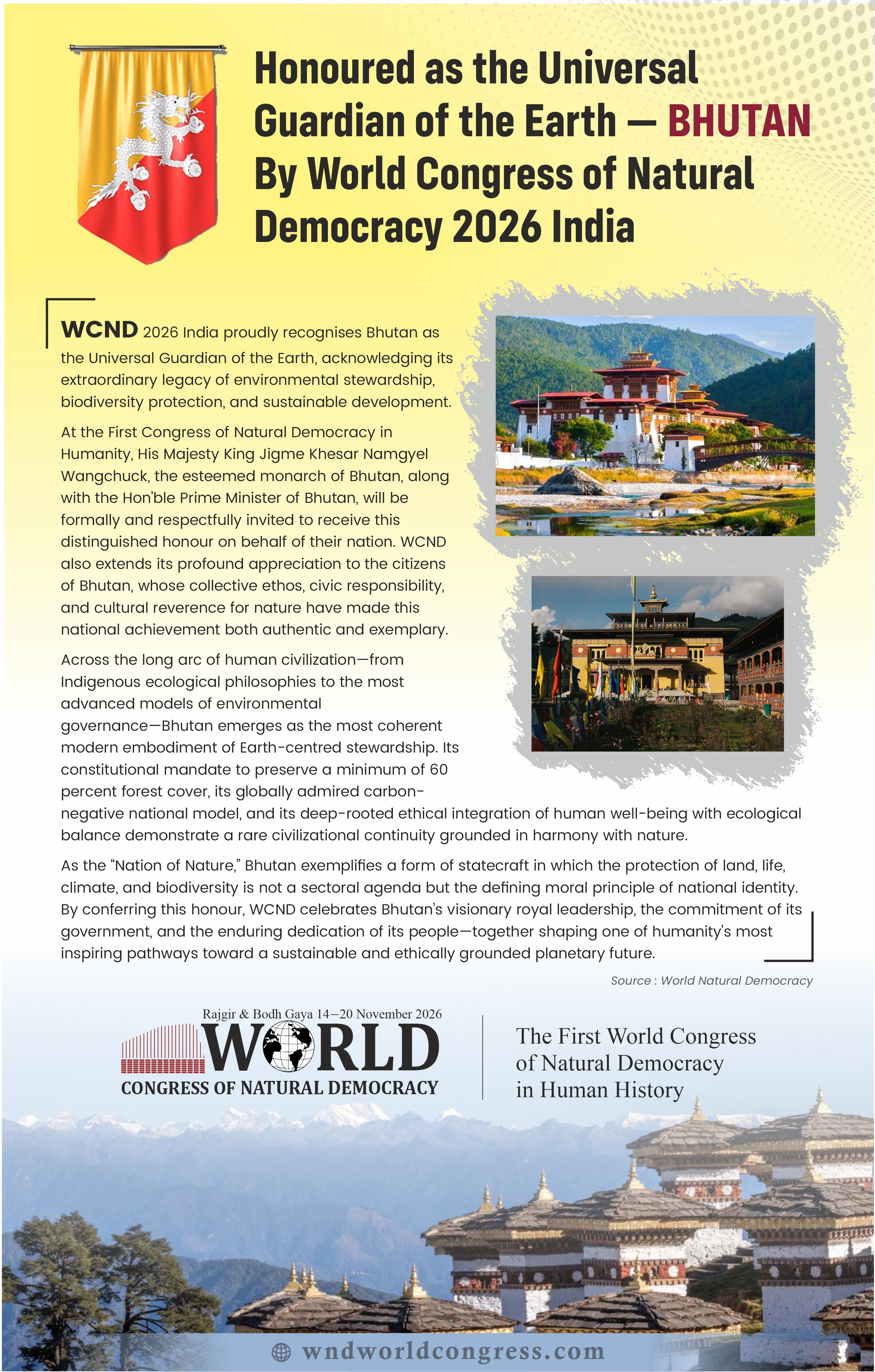
WCND 2026 India proudly recognises Bhutan as the Universal Guardian of the Earth, acknowledging its extraordinary legacy of environmental stewardship, biodiversity protection, and sustainable development. At the First Congress of Natural Democracy in Humanity, His Majesty King Jigme Khesar Namgyel Wangchuck, the esteemed monarch of Bhutan, along with the Hon’ble Prime Minister of Bhutan, will be formally and respectfully invited to receive this distinguished honour on behalf of their nation. WCND also extends its profound appreciation to the citizens of Bhutan, whose collective ethos, civic responsibility, and cultural reverence for nature have made this national achievement both authentic and exemplary.
Across the long arc of human civilization—from Indigenous ecological philosophies to the most advanced models of environmental governance—Bhutan emerges as the most coherent modern embodiment of Earth-centred stewardship. Its constitutional mandate to preserve a minimum of 60 percent forest cover, its globally admired carbon-negative national model, and its deep-rooted ethical integration of human well-being with ecological balance demonstrate a rare civilizational continuity grounded in harmony with nature.
As the “Nation of Nature,” Bhutan exemplifies a form of statecraft in which the protection of land, life, climate, and biodiversity is not a sectoral agenda but the defining moral principle of national identity. By conferring this honour, WCND celebrates Bhutan’s visionary royal leadership, the commitment of its government, and the enduring dedication of its people—together shaping one of humanity’s most inspiring pathways toward a sustainable and ethically grounded planetary future.
Recognized as "Universal Gaurdian of the Earth"
By World Congress of Natural Democracy, India
WCND 2026 is not merely a congress; it is a revolutionary journey conceived with the collective vision and aspirations of all humanity. Its mission is to seek sustainable and impactful solutions for the future of humanity and the preservation of our planet, in collaboration with stakeholders across the globe. In this endeavor, every contribution is not only acknowledged but celebrated—drawing inspiration from the efforts of each participant and honoring them with full universal recognition and respect.
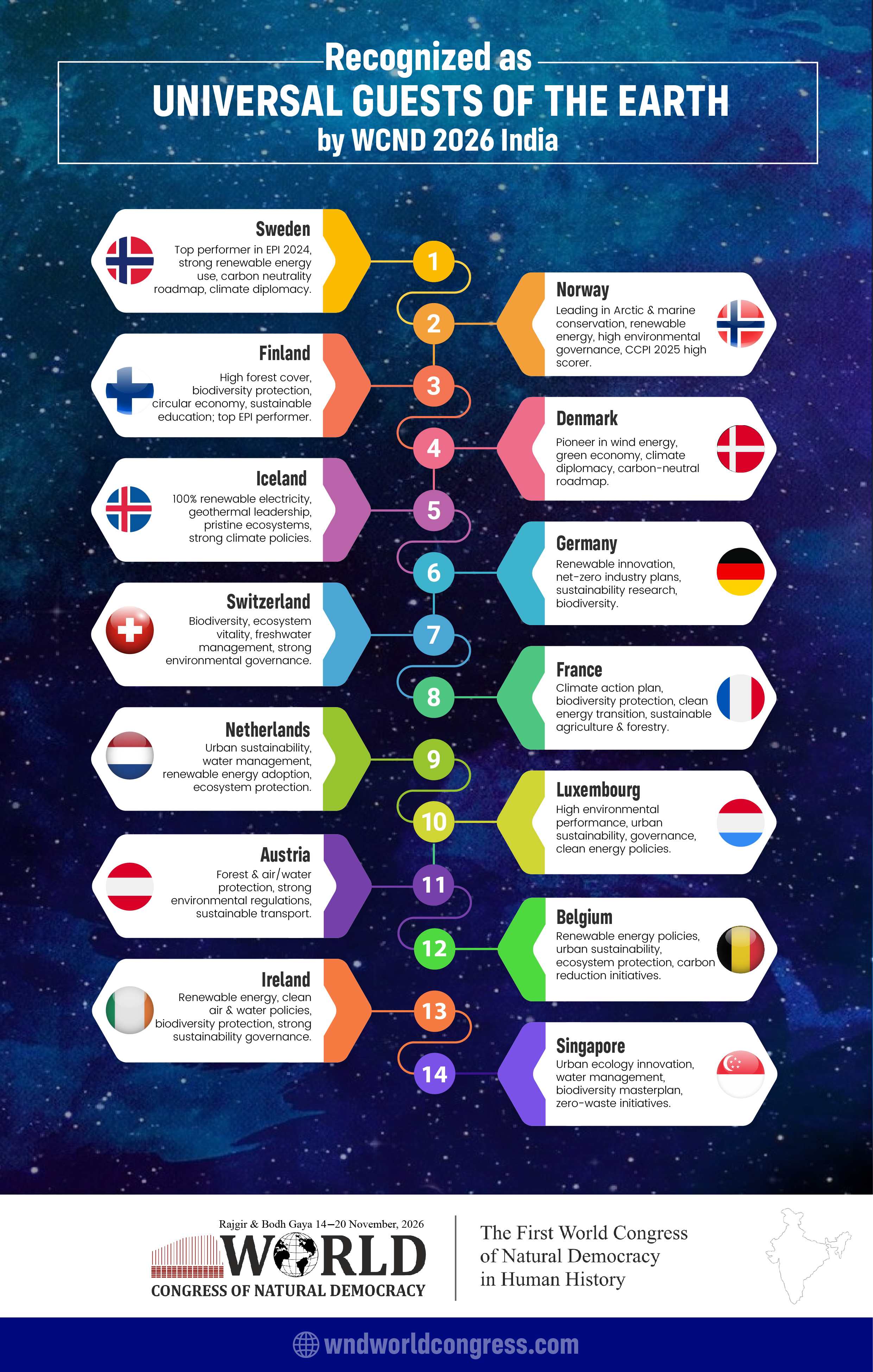
Under this initiative, nations are conferred the title of “Universal Guests of the Earth” for demonstrating exemplary leadership in planetary stewardship, sustainability, biodiversity conservation, and climate action. These countries have set international benchmarks in renewable energy, clean technology, ecosystem protection, urban sustainability, and global climate diplomacy, providing models of environmental governance that inspire the world.
This recognition is grounded in the principle of Universal Natural Citizenship, emphasizing that responsibility towards the Earth transcends national boundaries and that true environmental leadership is, in essence, a service to all humanity. WCND 2026 underscores that these efforts are not mere national achievements—they are global exemplars and sources of guidance for the collective future of humankind. Participation in this initiative represents not only a commitment to the Earth but also a prestigious opportunity for nations and individuals to contribute meaningfully to humanity’s shared destiny.
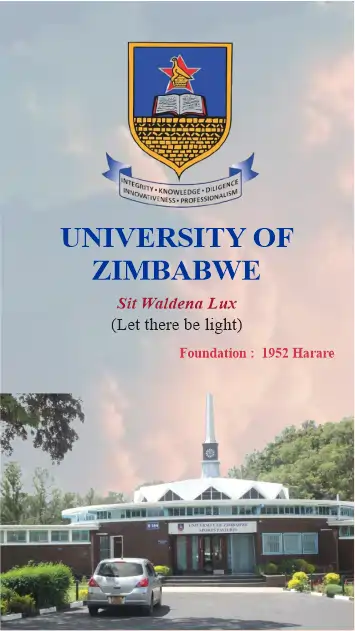
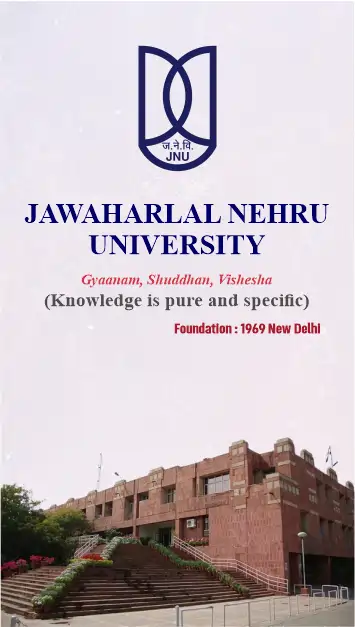
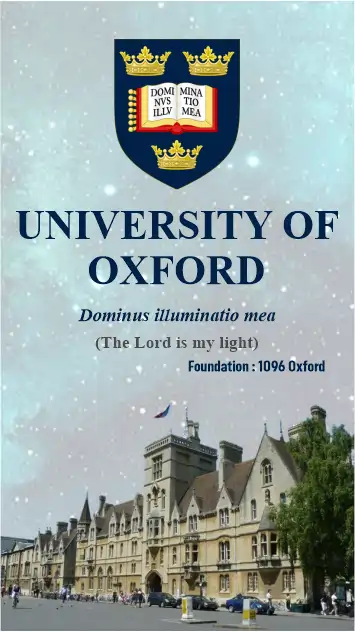
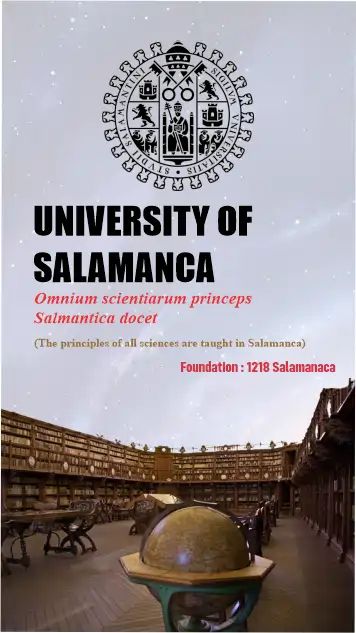
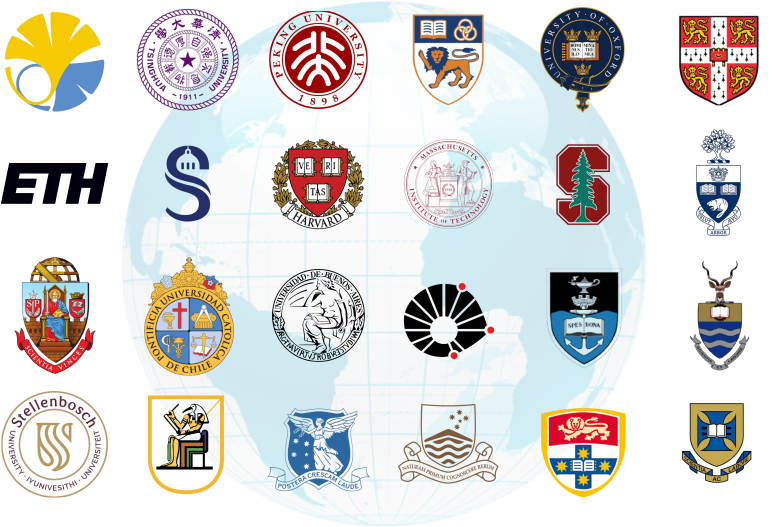
Guided by the vision of WCND 2026, and in recognition of the shared responsibility to address the pressing challenges of the twenty-first century, twenty-one of the world’s most distinguished institutions are respectfully invited, as Honoured Invited Institutions of the Earth, to contribute their wisdom to a dialogue on the critical global conditions of the twenty-first century and the rights of unborn generations, and to engage in voluntary intellectual collaboration in the service of peace, shared knowledge, and a united future for humanity.
This invitation is of special significance because Natural Democracy regards knowledge as a shared human endeavor rather than dividing institutions, recognizing that global challenges cannot be addressed by any one institution alone. Moreover, as the first Congress of Natural Democracy in human history, this event carries historic importance, making the honour of participation particularly meaningful.