Rooted in the intellectual legacy of ancient civilisations and shaped by contemporary ethical imperatives, the WCND logo stands as a historic and inspirational emblem of humanity’s enduring quest for knowledge, peace, and collective responsibility. Conceived by Kumar Gupta and inspired by the ancient Nalanda Mahavihara—widely acknowledged as the world’s first international university—the logo recalls an era when knowledge transcended borders, cultures, and faiths. It symbolically reconnects that civilisational spirit with present-day aspirations for global harmony, sustainable development, and ethical governance, positioning education and wisdom as the foundational forces of peace.
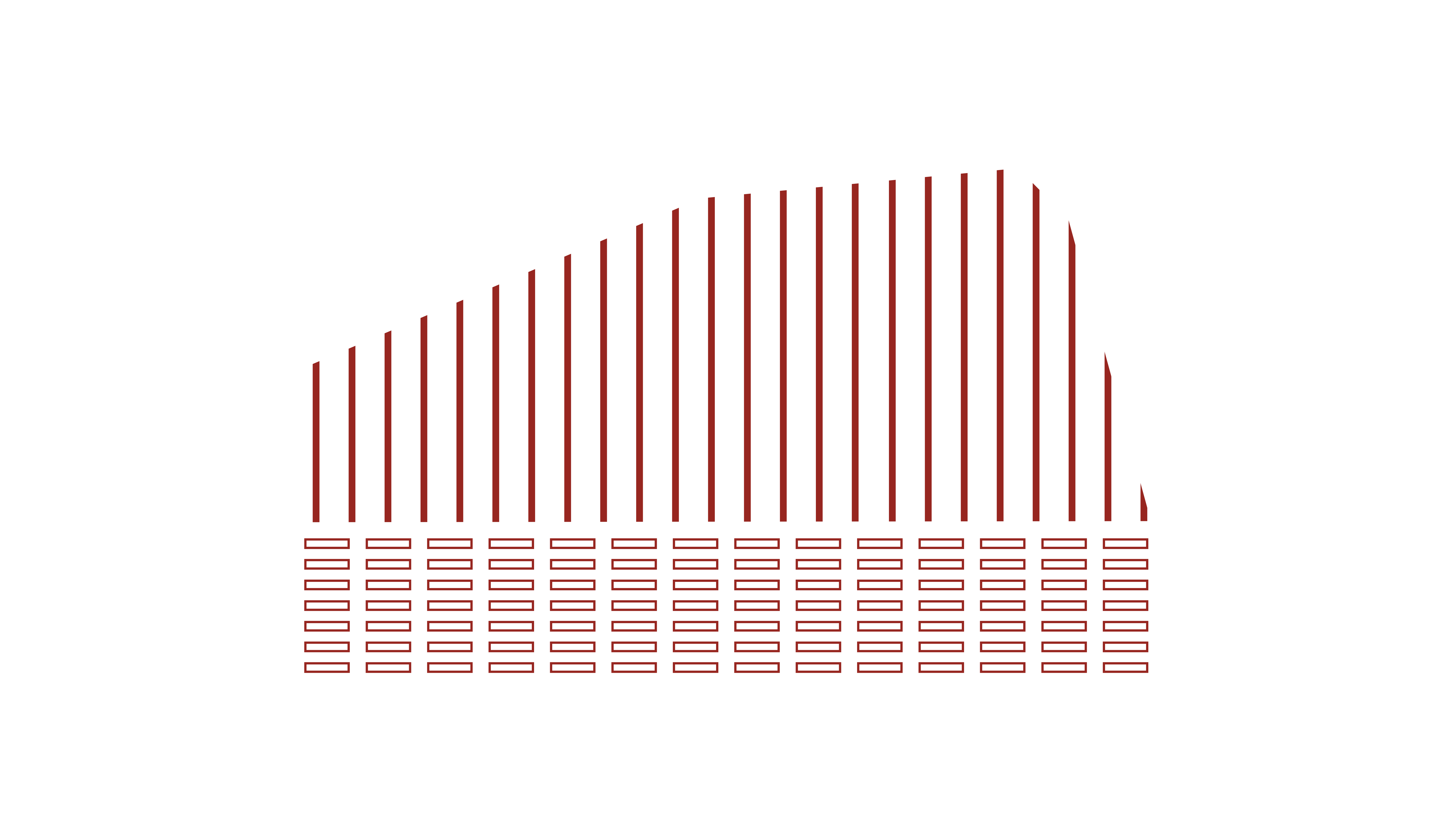
The structural hierarchy of the logo is deliberately symbolic and academically grounded:
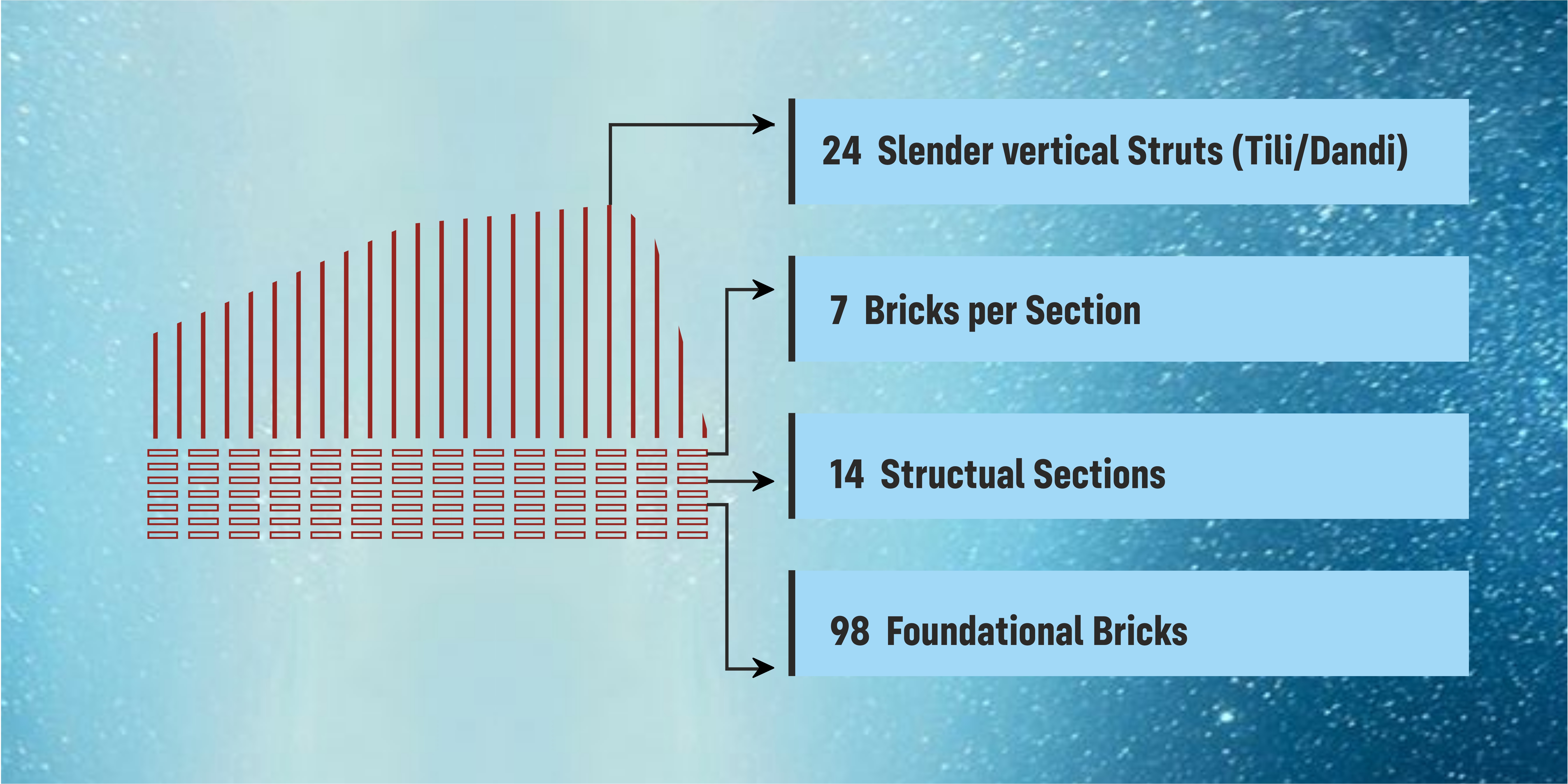
The logo’s “tongue” is rendered in a colour inspired by human speech, emphasising that knowledge and dialogue are indispensable instruments of peacebuilding. The left-leaning form signifies compassion, empathy, and humility, while the upright right form represents truth, righteousness, and moral steadfastness, together expressing a balanced synthesis of inner sensitivity and outward integrity.
When the symbolic numbers 24, 98, 14, and 7 are combined, they total 143, a widely recognised expression of universal love. This number reflects a shared ethical foundation across Sikh, Parsi, Jewish, Bahá’í, Shinto, Hindu, and other spiritual traditions, where love transcends selfishness and manifests as love for truth, justice, humanity, and nature—the deeper meaning we invoke when we say, “I love you.”
Collectively, the WCND logo transcends conventional design to function as a living academic and ethical symbol, representing knowledge, spiritual unity, compassionate action, responsible dialogue, ecological awareness, inner freedom, and global harmony. As articulated by Dr. Jawad Abdullah, Founder of World Natural Democracy, the logo calls upon humanity to embrace wisdom, moral equilibrium, truth-guided communication, self-liberation, and universal responsibility, in alignment with the natural, spiritual, and cosmic rhythms of the Earth.